
Daddy’s Woodstock (120 x 100cm) Oil/tempera on MDF
The painting Daddy’s Woodstock is part of a series, in which the artist reflects on his biography. Born ten years after the end of World War II, the effects of this catastrophic period are palpable and formative. The father’s silence about the war and the rule of the Nazi, stands behind the booming German economy. The country reinvents itself in a christian-democratic-social society.
The succeeding generation experiences a breakthrough into a diverse future, with Beat, Pop, and Hippie culture from the West, and left-wing, communist worldviews from the East. A new sense of self emerges in many young people. The world seems open, both inwardly and outwardly. The art scene becomes diverse and experimental, confrontational and innovative. Social and capitalist criticism is the order of the day. A humanistic-progressive, politically left-leaning view of humanity focuses on equality and solidarity in human societies.
Despite the diversity and freedom of this era, the wounds and traumas of the past world wars survive in the individual and collective unconscious. The father, now old and sick, remains silent. This silence occupies the son. He sees it as an obstacle in the flow of life. He wants to learn about the person of his father. He longs for a conversation, an exchange, an encounter with him. He wants to make his father speak. He knows, from personal experience and literature, the powerful effects of psychedelic drugs such as mescaline and LSD. Perhaps these substances could loosen his father’s tongue, freeing him from the burden of repressed memories?
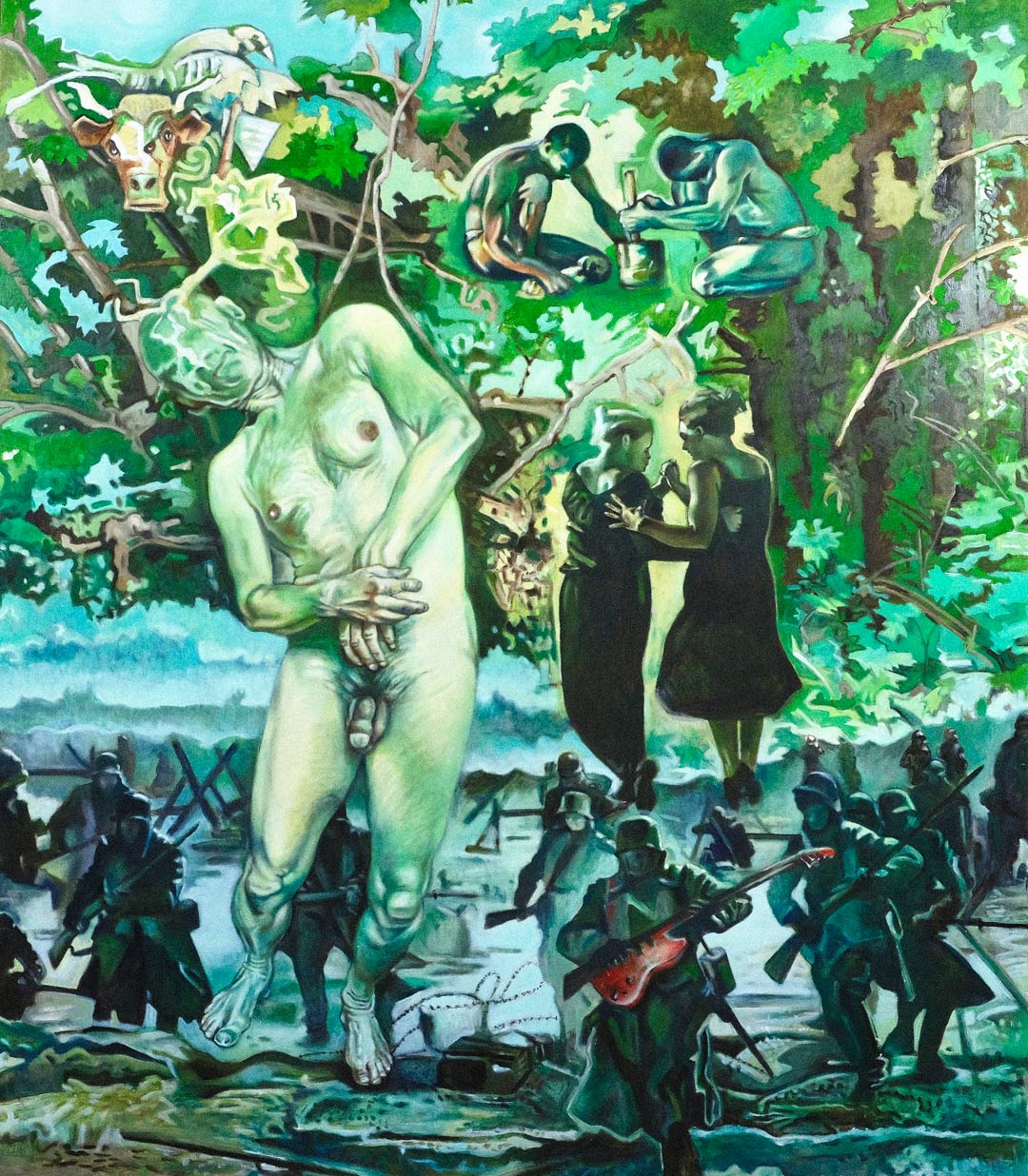
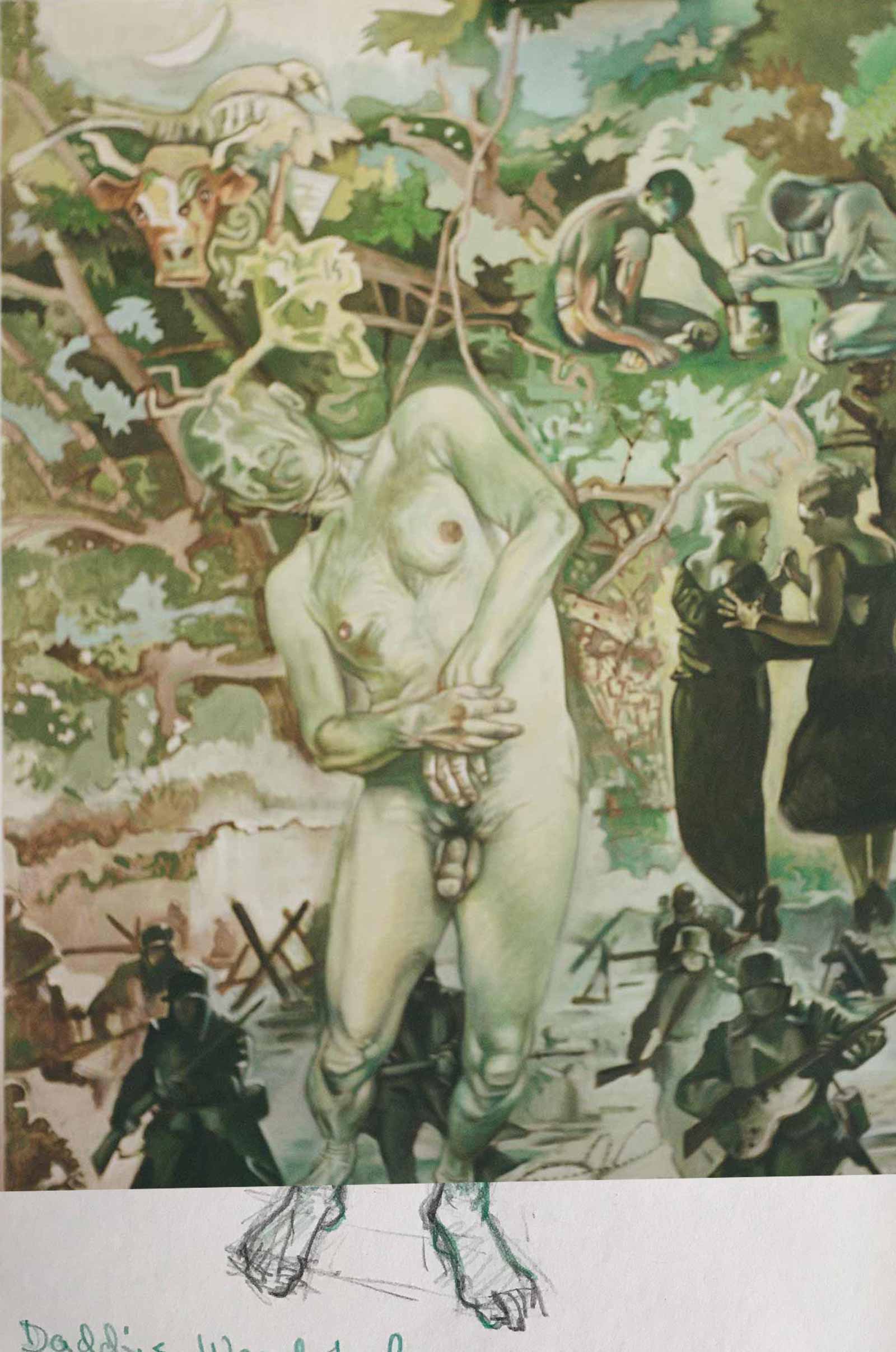
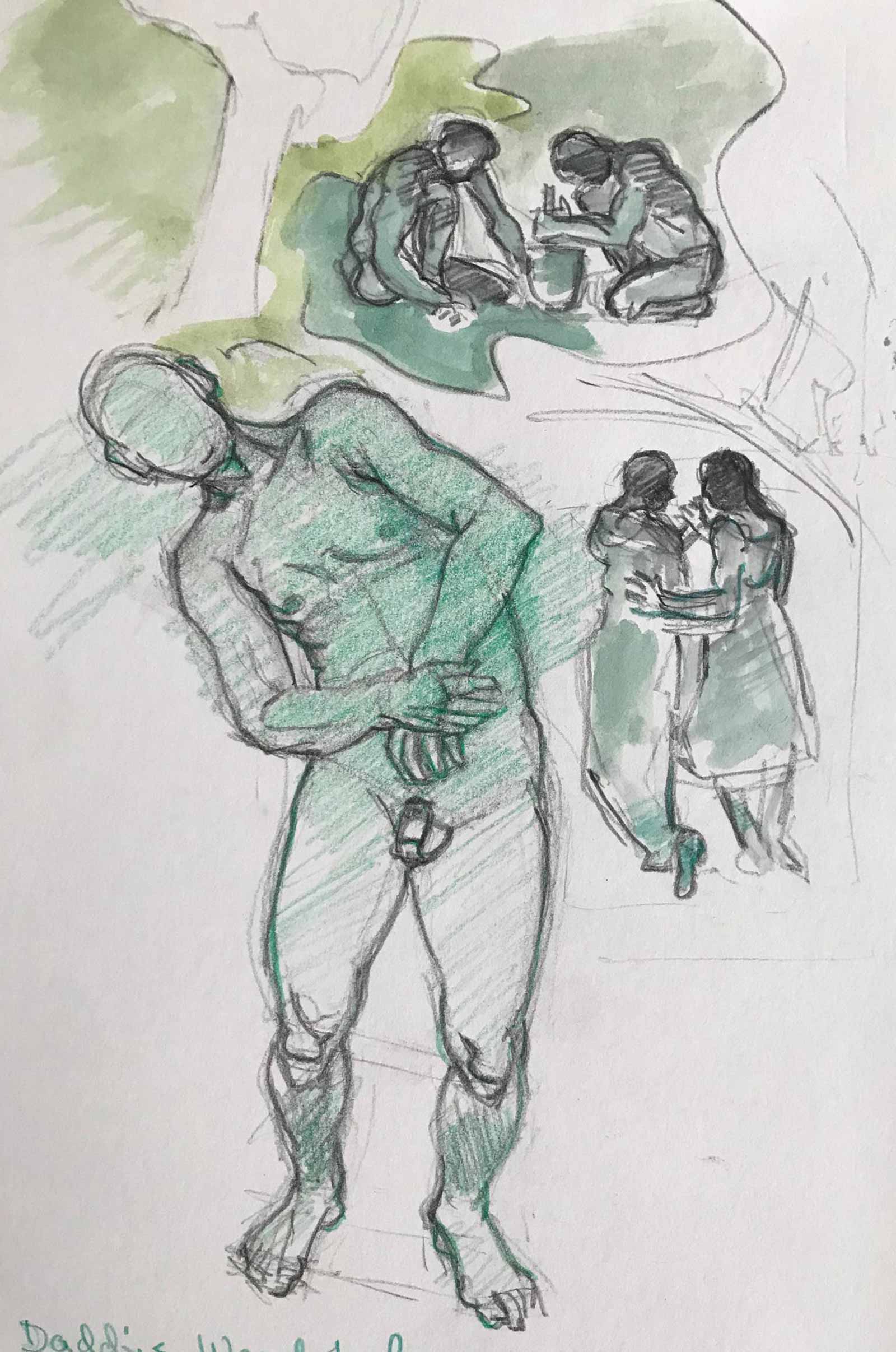
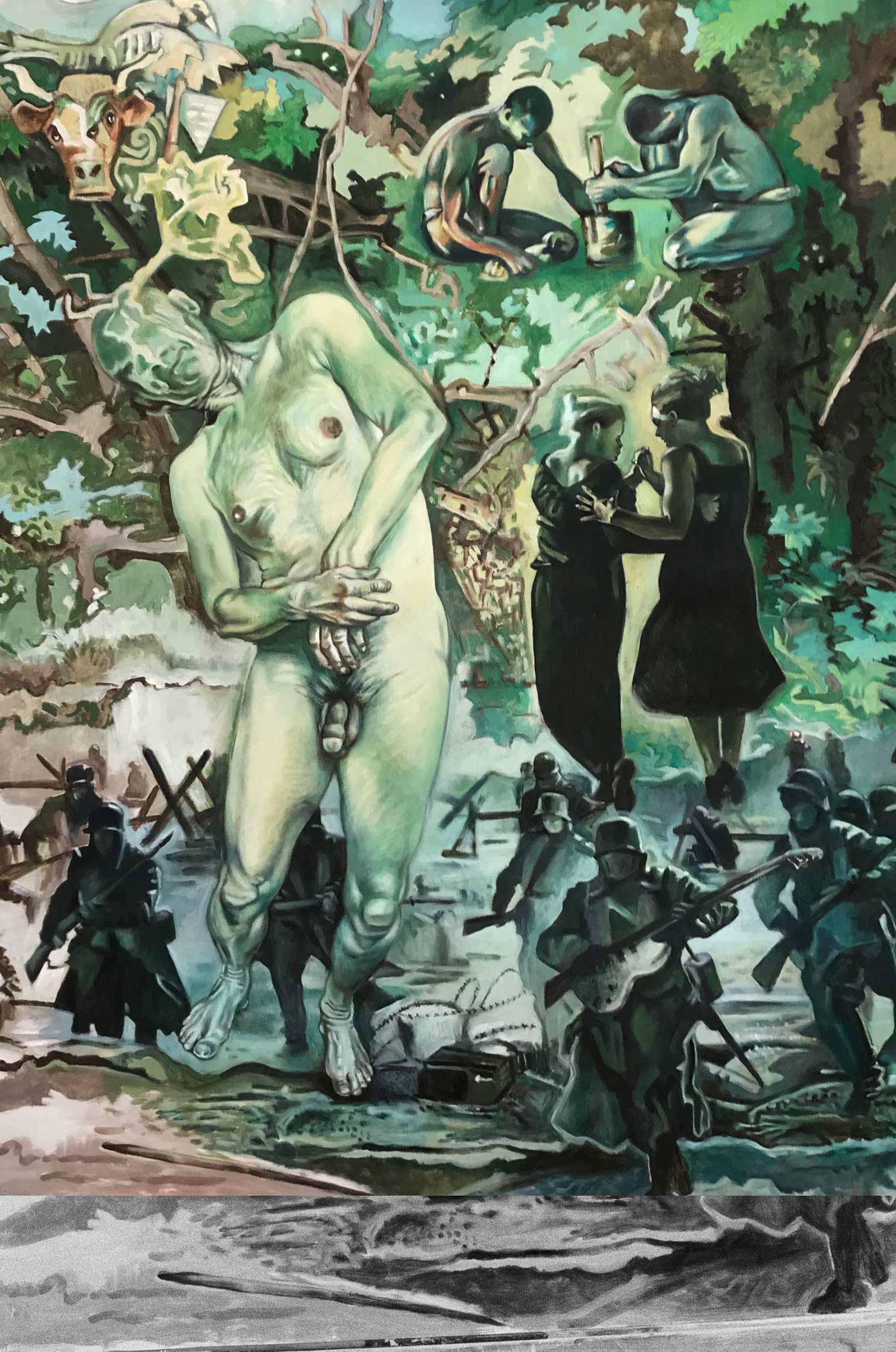
In the painting Daddy’s Woodstock, this theme comes to the viewer as a painted narrative. The father, naked and modestly covering his genitals, hovers over the battlefields of the past war. As a survivor, he seeks the camouflage of the forest, the birds, and cows—his rural heritage, passed down from his own father—as a retreat. The son slips into the moss-covered body of the father. To him, both the forest and the battlefield are places where dancers, indigenous Peyote seekers, and rock musicians come together.
War and peace—two worlds that could not be more opposite. The dichotomy of Father/War and Son/Peace must be maintained as long as it remains impossible to break the silence.
Mein Vater, Jahrgang 1919, war ein introvertierter Typ. Wenn es etwas zu sagen gab, mußte es kurz und sachlich sein. Meist sah ich ihn in seinem Arbeitsgewand berufliche Aufgaben erledigen. In der Freizeit trug er eine andere Kluft, die auch nach Arbeit aussah. Pflichtbewusst, war er ständig mit etwas beschäftigt, das einer Maxime gleichkam, die ihm und allen anderen Sinn und ein gewisses Maß an Sicherheit vermittelte. Stumm saß er am Lenkrad seines Opels, ich daneben auf dem Beifahrersitz und wartete auf seine Anweisungen. Schon damals vermutete ich, dass hinter diesem, sich bei jeder Ausfahrt wiederholenden Ritual, eine erzieherische Absicht steckte. Mit wenigen Worten schulte er mich in Tätigkeiten ein, als wäre ich ein Automat, der später einmal wie er, gewisse Aufgaben zu erledigen hätte.
Daddy’s Woodstock (120 x 100cm) Oil/tempera on MDF
The painting Daddy’s Woodstock is part of a series, in which the artist reflects on his biography. Born ten years after the end of World War II, the effects of this catastrophic period are palpable and formative. The father’s silence about the war and the rule of the Nazi, stands behind the booming German economy. The country reinvents itself in a christian-democratic-social society.
The succeeding generation experiences a breakthrough into a diverse future, with Beat, Pop, and Hippie culture from the West, and left-wing, communist worldviews from the East. A new sense of self emerges in many young people. The world seems open, both inwardly and outwardly. The art scene becomes diverse and experimental, confrontational and innovative. Social and capitalist criticism is the order of the day. A humanistic-progressive, politically left-leaning view of humanity focuses on equality and solidarity in human societies.
Despite the diversity and freedom of this era, the wounds and traumas of the past world wars survive in the individual and collective unconscious. The father, now old and sick, remains silent. This silence occupies the son. He sees it as an obstacle in the flow of life. He wants to learn about the person of his father. He longs for a conversation, an exchange, an encounter with him. He wants to make his father speak. He knows, from personal experience and literature, the powerful effects of psychedelic drugs such as mescaline and LSD. Perhaps these substances could loosen his father’s tongue, freeing him from the burden of repressed memories?
In the painting Daddy’s Woodstock, this theme comes to the viewer as a painted narrative. The father, naked and modestly covering his genitals, hovers over the battlefields of the past war. As a survivor, he seeks the camouflage of the forest, the birds, and cows—his rural heritage, passed down from his own father—as a retreat. The son slips into the moss-covered body of the father. To him, both the forest and the battlefield are places where dancers, indigenous Peyote seekers, and rock musicians come together.
War and peace—two worlds that could not be more opposite. The dichotomy of Father/War and Son/Peace must be maintained as long as it remains impossible to break the silence.
Mein Vater, Jahrgang 1919, war ein introvertierter Typ. Wenn es etwas zu sagen gab, mußte es kurz und sachlich sein. Meist sah ich ihn in seinem Arbeitsgewand berufliche Aufgaben erledigen. In der Freizeit trug er eine andere Kluft, die auch nach Arbeit aussah. Pflichtbewusst, war er ständig mit etwas beschäftigt, das einer Maxime gleichkam, die ihm und allen anderen Sinn und ein gewisses Maß an Sicherheit vermittelte. Stumm saß er am Lenkrad seines Opels, ich daneben auf dem Beifahrersitz und wartete auf seine Anweisungen. Schon damals vermutete ich, dass hinter diesem, sich bei jeder Ausfahrt wiederholenden Ritual, eine erzieherische Absicht steckte. Mit wenigen Worten schulte er mich in Tätigkeiten ein, als wäre ich ein Automat, der später einmal wie er, gewisse Aufgaben zu erledigen hätte.
Luigi Trenkler | Sketches Paintings Photographs | Graben 13/35, 1010 Vienna | Phone: +43 664 928 62 61 | E-mail: info@artbyluigitrenkler.net
Luigi Trenkler | Sketches Paintings Photographs | Graben 13/35, 1010 Vienna | Phone: +43 664 928 62 61 | E-mail: info@artbyluigitrenkler.net